Bringing Home a New Puppy: The Complete First-Month Checklist
Everything you need before bringing a puppy home — supplies checklist, house-proofing, first vet visit, vaccination timeline, and what to expect in the first 30 days.
Educational guidance, not a diagnosis or substitute for veterinary care. PetVitals separates editorial information from advertising and affiliate relationships.
Keep your puppy plan moving
Use the planning tools for vaccines, first visits, and early-care costs.
Quick Answer: New Puppy Checklist
Before bringing a puppy home, prepare three things first: a safe space, a vet plan, and a simple daily routine. Buy the essentials, puppy-proof the house at floor level, schedule the first vet visit, confirm the vaccine record, and decide how you will handle potty breaks, feeding, crate time, sleep, and supervision for the first week.
Before Your Puppy Arrives: The Shopping List
Bringing a puppy home is exciting — but the first 24 hours go smoother when you're prepared. Here's what to have ready before pickup day:
Essential Supplies
- Collar and ID tag: Lightweight, adjustable. Get a tag engraved with your phone number before you pick up the puppy
- 6-foot leash: Avoid retractable leashes for training — they teach pulling behavior
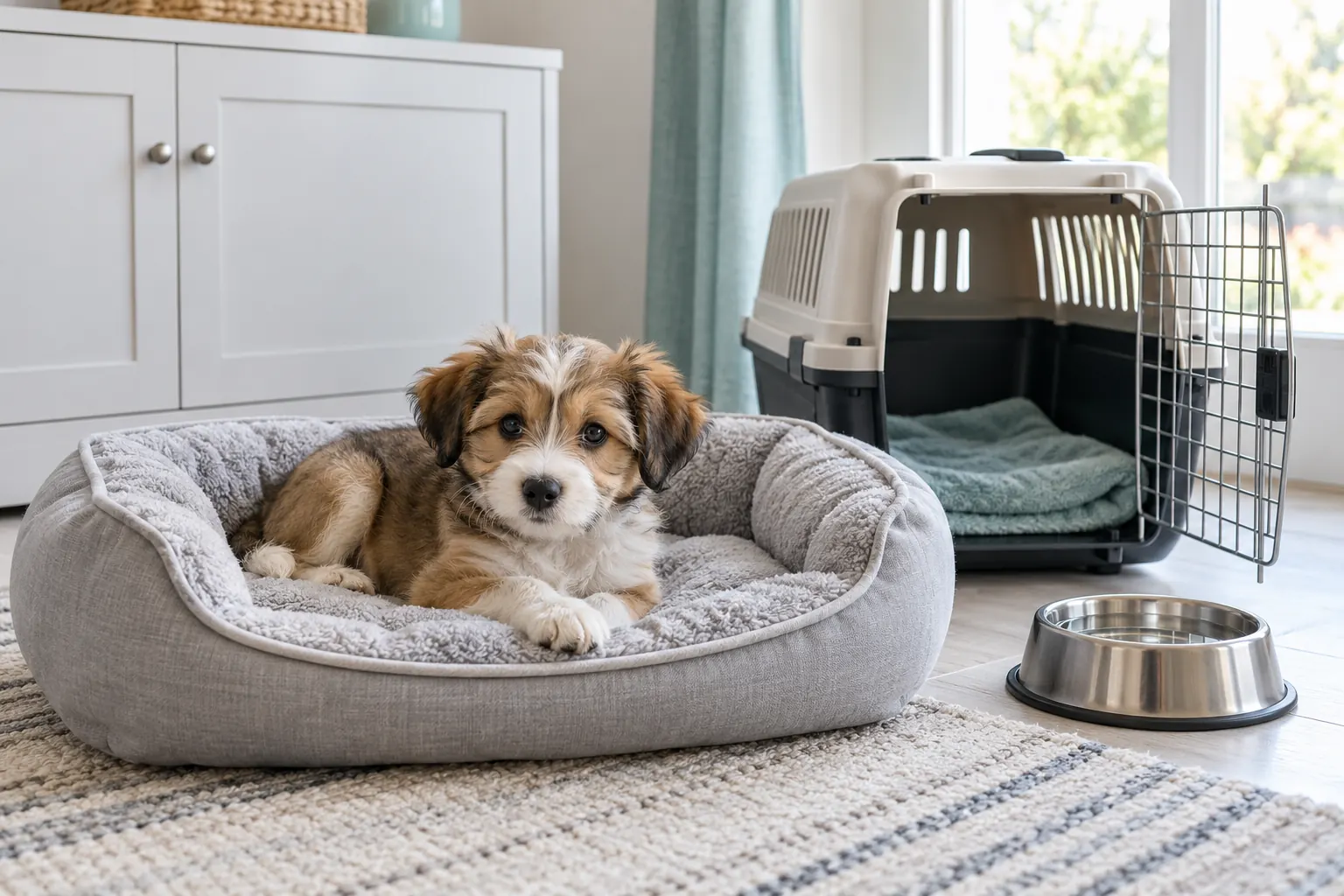
- Crate: Sized so your puppy can stand, turn around, and lie down comfortably. Too large = accidents in one corner; too small = cruel. Use the divider panel for growth
- Food and water bowls: Stainless steel is easiest to clean and doesn't harbor bacteria like plastic
- Puppy food: Ask the breeder or shelter what they're currently feeding. Stick with it for at least the first week, then transition slowly if you plan to change
- Enzymatic cleaner: Regular cleaners don't break down urine enzymes — your puppy will keep returning to the same spot. Nature's Miracle or similar
- Chew toys: Kong, Nylabone, or similar. Puppies explore with their mouths and need appropriate outlets
- Baby gates: Block off rooms you can't supervise
Nice-to-Have
- Puppy playpen: Creates a safe containment area larger than a crate
- Treat pouch: For training sessions — fumbling in pockets loses the moment
- Pet camera: If you work outside the home, it's peace of mind
- Scale: Track weight weekly during rapid growth phases
Puppy-Proofing Your Home
Puppies investigate everything with their mouths. Get on your hands and knees at puppy eye-level and look for:
- Electrical cords (cover or block access)
- Toxic houseplants (check our plant toxicity guide for specifics)
- Human medications and supplements (move to high cabinets)
- Cleaning supplies under sinks (install childproof latches)
- Small objects: coins, hair ties, kids' toys, batteries — all choking or obstruction risks
- Trash cans: get lidded ones. Used tampons, food scraps, and chicken bones are common emergency surgery causes
The First Vet Visit: What to Expect
Schedule the visit within the first 3–5 days. Bring:
- Any medical records from the breeder/shelter
- A fresh stool sample (your vet will thank you)
- Your list of questions
The vet will perform a full physical exam, check for congenital issues (heart murmurs, hernias, patellar luxation), discuss the vaccination schedule, and start parasite prevention.
Typical puppy vaccination schedule:
- 6–8 weeks: DHPP (distemper, hepatitis, parainfluenza, parvo)
- 10–12 weeks: DHPP booster, Bordetella (kennel cough)
- 14–16 weeks: DHPP final booster, Rabies
- Annual thereafter
The First 30 Days: What Nobody Tells You
Week 1: Your puppy will cry at night. This is normal — they've just been separated from their litter. Keep the crate near your bed. A warm water bottle wrapped in a towel can help.
Week 2–3: House training begins in earnest. Take them out every 2 hours during the day, after meals, after play, and after naps. Praise and treat immediately when they go outside. Expect accidents — that's what the enzymatic cleaner is for.
Week 4: Start basic training: sit, stay, come, and leash walking. Keep sessions to 5–10 minutes. Puppies have the attention span of a goldfish.
Socialization is critical in the 8–16 week window. Expose your puppy (safely) to different people, vaccinated dogs, surfaces, sounds, and environments. Under-socialized puppies often become fearful adult dogs.
The Hidden Costs
Beyond supplies, budget for:
- First-year vet costs: $500–$1,200 (exams, vaccines, spay/neuter)
- Training classes: $150–$400 for a 6-week group course
- Unexpected: at least $1,000—puppies eat things they shouldn't
This is where pet insurance for puppies can make a big difference: early enrollment means no pre-existing conditions, and the first year is the most accident-prone. Compare pet insurance cost before choosing a plan.
First 24 Hours Home
The first day should be boring on purpose. Skip the party, limit visitors, and let the puppy learn the sleeping area, potty door, water bowl, and safe chew toys. Too much excitement can lead to accidents, overstimulation, and a rough first night.
Use this simple first-day plan:
- Go directly to the potty area before entering the house.
- Offer water and a small meal of the same food they were eating before.
- Introduce the crate or pen with treats, not force.
- Keep the leash on indoors if you need gentle supervision.
- Take a potty break after sleeping, eating, drinking, and playing.
- End the evening calmly with the crate near your bed.
If your puppy refuses food for one meal but is bright and playful, stress may be the reason. If they vomit repeatedly, have diarrhea, seem weak, cough, or will not eat for a full day, call your veterinarian.
First Vet Visit Checklist
Bring more than the puppy. Bring information. Your veterinarian will make better decisions if you have:
- Breeder, shelter, or rescue records
- Vaccine dates and product names
- Deworming dates
- Microchip number if available
- Current food brand and amount
- Any coughing, diarrhea, vomiting, itching, or appetite notes
- Questions about insurance, parasite prevention, socialization, and spay/neuter timing
Most puppies need a vaccine series, not just one shot. Use our puppy vaccination schedule to understand the 6-16 week timeline, then let your veterinarian adjust it for your puppy's age, risk, and records.
Puppy Budget: Supplies vs. Medical Costs
Supplies are predictable. Medical costs are not. A crate, leash, food, bowls, toys, and cleaner are one-time or routine expenses. Vet visits, vaccines, parasite prevention, diarrhea checks, swallowed-object scares, and emergency visits can vary.
For a cleaner budget, separate costs into:
- Setup costs: crate, pen, bowls, bed, leash, collar, ID, cleaner, toys
- Routine care: exams, vaccines, parasite prevention, food, grooming
- Training: puppy class, treats, harness, enrichment toys
- Emergency buffer: vomiting, toxin ingestion, broken baby teeth, swallowed socks, injuries
If you want a deeper breakdown, see puppy first vet visit cost, dog insurance cost, and pet insurance cost.
Puppy-Proofing by Room
Kitchen: lock trash, keep onions, garlic, grapes, chocolate, coffee, and xylitol products out of reach. Use the toxicity checker for quick food and plant checks.
Bathroom: secure medications, razors, floss, tampons, cleaning products, and toilet access.
Living room: block cords, remotes, kids' toys, batteries, and houseplants.
Bedroom: remove socks and underwear from the floor. Fabric foreign bodies are common puppy emergencies.
Garage and yard: secure antifreeze, fertilizers, pesticides, rodent bait, sharp tools, mulch, and toxic plants.
New Puppy FAQ
What should I buy before bringing a puppy home?
Start with a crate or pen, leash, collar, ID tag, bowls, the current puppy food, safe chew toys, enzymatic cleaner, baby gates, and a vet appointment. Add extras later after you know your puppy's size and habits.
When should a new puppy go to the vet?
Schedule the first visit within a few days of coming home, sooner if the puppy is coughing, vomiting, has diarrhea, seems weak, or lacks vaccine records.
Should I get pet insurance before the first vet visit?
If you plan to buy insurance, earlier is usually cleaner because symptoms found before enrollment may become pre-existing conditions. Compare coverage and waiting periods before relying on a policy.
How often should a puppy go outside to potty?
Many puppies need to go out after waking, eating, drinking, playing, and at least every couple of hours during the day. Young puppies cannot reliably hold it for long.
Sources and References
This article is based on the following publicly available sources. Content is written in our own words - we do not copy or translate original text.
Continue with PetVitals
Save a checklist, explore a related guide, or use a planning tool.
Puppy First-Year Vet Cost Checklist
A printable planning sheet for vaccine visits, preventives, spay/neuter budget, and insurance comparison notes.
Read Next
Hand-picked articles to continue your reading.
How to Calculate Your Dog's Daily Calorie Needs: A Complete Guide
Learn to calculate your dog's Resting Energy Requirement (RER) and Maintenance Energy Requirement (MER) using veterinary-standard formulas. A step-by-step guide for every life stage.
Is Pet Insurance Worth It? Cost vs. Risk Analysis for 2026
Pet insurance is worth it when a sudden vet bill would change the care you can choose. Compare premiums, emergency risk, exclusions, deductibles, and self-funding.