Pet-Safe and Pet-Friendly Cleaning Products for Dogs and Cats
Choose a cleaner for the job, build a cat-home routine, or check disinfection and floor re-entry directions. If exposure has already happened, contact your veterinarian or animal poison control promptly; do not wait for symptoms.
Access rule
Label
Complete required contact time, rinsing, ventilation, and drying before pets return.
Extra caution
Cats
Cats groom residue from paws and fur.
Best default
Low residue
Use mild, unscented cleaners, ventilation, and label directions.
Step 1
Keep pets out
Close the room while cleaning
Step 2
Ventilate
Open windows or run exhaust fans
Step 3
Follow the label
Complete contact time and required rinsing
Step 4
Check before return
Meet pet-access directions; surfaces must be dry and cool
Start With These Guides
Choose the guide for the job you need to finish.
Compare Cleaning Products
Categories, label checks, and two real manufacturer-direction examples.
OpenCat-Friendly Cleaning Routine
Daily care for bowls, bedding, litter areas, and surfaces cats groom after touching.
OpenPet-Safe Floor Cleaners
Floor cleaner options for pets that walk, lick, and groom.
OpenCan Cats Walk After Mopping?
Drying time, paw residue, wet floor exposure, and safer mopping routines.
OpenDisinfectants Safe for Cats
Contact time, rinsing, ventilation, and disinfectant ingredients to treat carefully.
OpenCommon Household Poisons
Broader home safety guide for poison prevention.
OpenSpecific Cleaning Questions
Ingredient cautions and next steps for individual cleaning problems.
What Does Pet-Friendly Mean?
Check marketing claims against the exact product directions.
OpenDisinfectants Safe for Cats
Cat-specific disinfectant rules for floors, bowls, litter boxes, and counters.
OpenPet-Safe Floor Cleaner
Compare steam, diluted soap, vinegar, enzymatic cleaners, and disinfectant residue.
OpenVinegar Floor Cleaner and Pets
When diluted vinegar is reasonable, when to avoid it, and better urine cleaner choices.
OpenEssential-Oil Cleaners and Cats
Avoid risky oil residues, diffusers, and strong natural fragrance around cats.
OpenPoisoning Symptoms After Cleaner Exposure
Look up vomiting, drooling, tremors, coughing, and other warning signs.
OpenCleaner Toxicity Checks
Quick checks for household products and exposures.
Cleaning Wipes
Disinfecting wipe residue and ingestion concerns.
OpenBleach
Use caution with wet residue, fumes, and mixing risks.
OpenAmmonia
Airway irritation and dangerous mixing risks.
OpenVinegar
Surface limits and odor concerns around pets.
OpenEssential Oils
Concentrated oil and fragrance concerns around pets.
OpenEmergency Vet Cost
Financial planning after accidental toxin exposure.
Open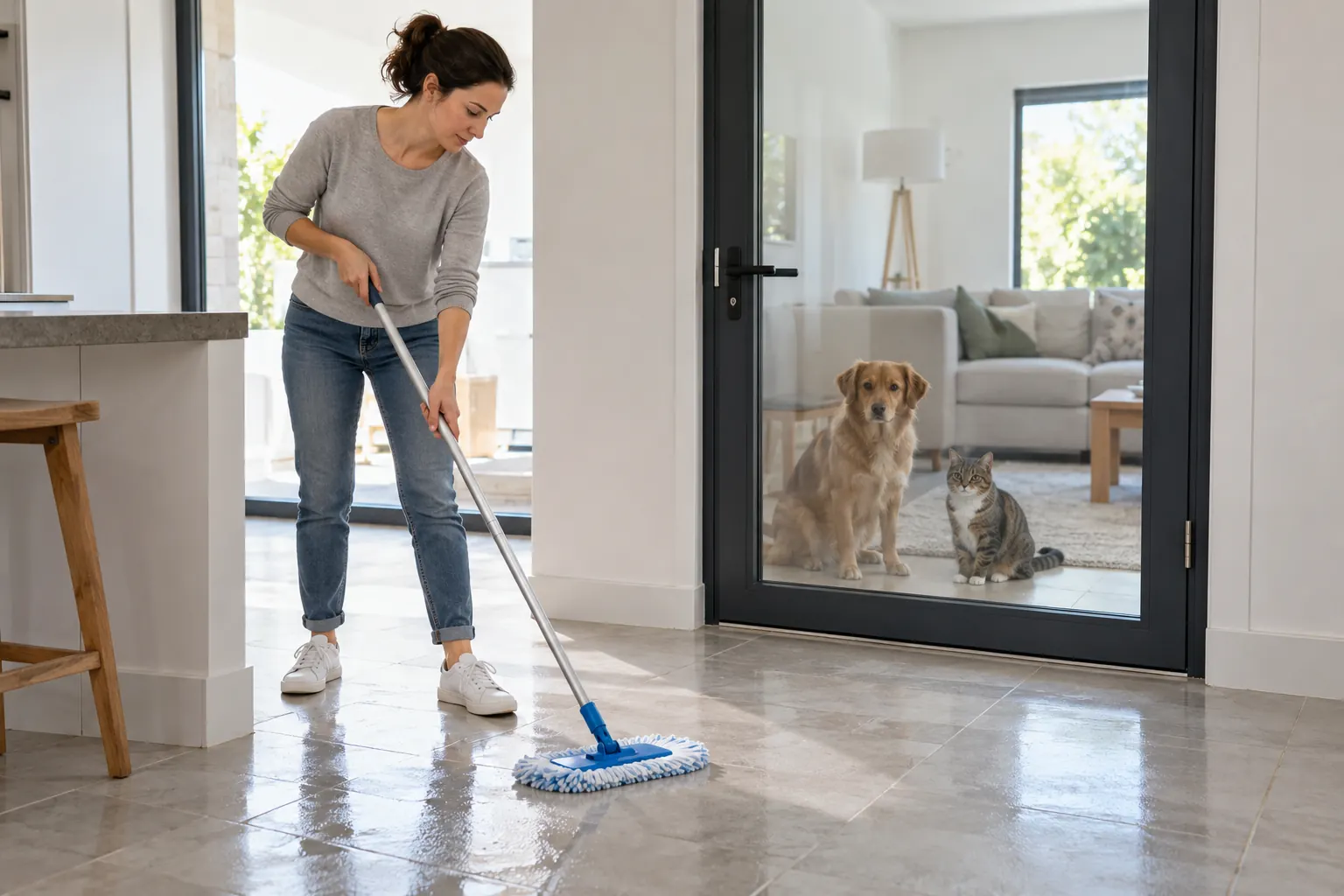
Pet-Safe Cleaning Checklist
A printable checklist for product directions, pet access, floors, litter boxes, bowls, and exposure notes.